
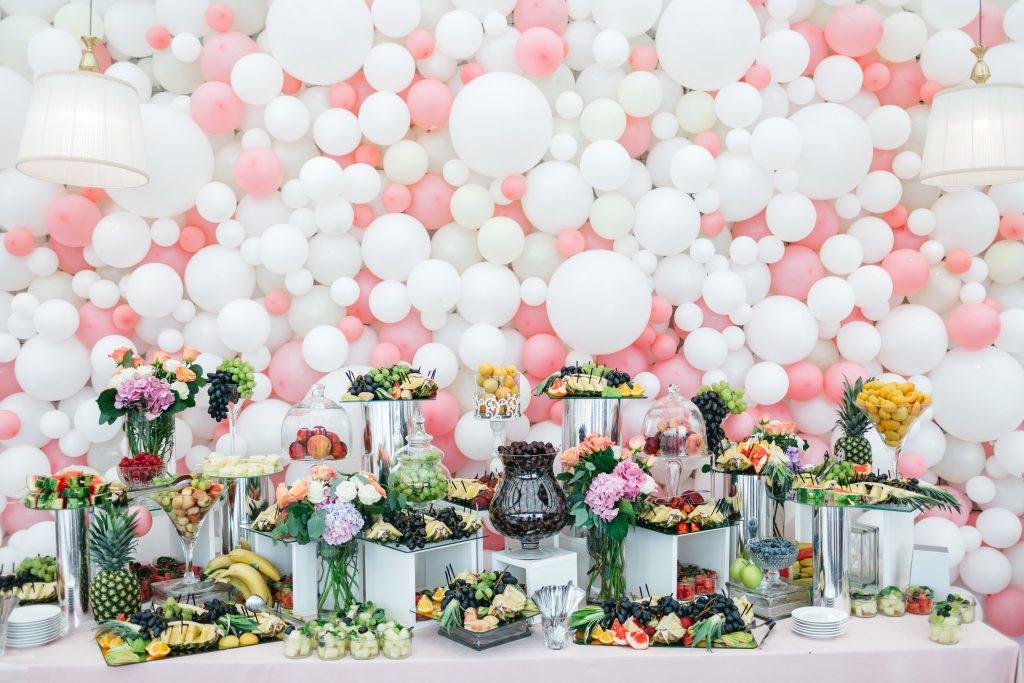
Party balloons as we know them were invented in 1824, when British scientist Michael Faraday made the first rubber balloons in London for hydrogen experiments. Thomas Hancock sold do-it-yourself rubber balloon kits in 1825, modern latex balloons arrived in the 1930s, and colourful foil balloons became popular in the 1970s.
Picture a birthday party without a single balloon. No bobbing bunches tied to the garden gate, no colourful arch over the entrance, no small child dragging one across the floor by its string. It feels oddly incomplete, doesn’t it? Yet the party balloon is a surprisingly recent invention. The short answer is that the first rubber balloons were made in 1824, but the full story stretches back thousands of years and wanders through ancient rituals, scientific laboratories, rubber factories and modern celebration culture.
In this guide, we trace that journey step by step: from inflated animal bladders to the first rubber balloons made by a famous British scientist, from the latex revolution of the 1930s to the foil and helium creations that float above parties today. Whether you are planning a birthday, feeling curious about history or simply hunting for a few fascinating facts to share at the next gathering, you will find the answer here.
Before Rubber: The Ancient Origins of Balloons
Animal Bladders Were the First Balloons
Long before anyone had heard of latex, people discovered that an animal’s bladder could be blown up, tied off and used as a plaything. Pig bladders were especially popular because they were easy to come by, stretched well and held air for a respectable length of time. Children and adults alike would inflate them and bat them about, and in several parts of Europe such bladders even served as early footballs, long before sturdier leather balls took over.
These early balloons were hardly glamorous. They were lumpy, a rather dull shade of cream and usually smelt of whatever they had recently been. They were, however, entirely practical, which is why they survived for centuries. Strictly speaking, they were toys and tools rather than decorations, so we cannot really call them party balloons.
Ceremonial and Symbolic Uses
Balloons also appear in ceremonial settings. Accounts of Aztec culture suggest that cat intestines were inflated and offered during religious ceremonies, although historians treat some of these details with caution. Whatever the precise facts, the idea is the same: an inflated object, lifted above the ground, carried a sense of wonder and symbolism well before it carried a “Happy Birthday” message.
Hot Air and Hydrogen: The Flying Balloons of 1783
The balloons most people meet in history lessons arrived in 1783. In June of that year, the Montgolfier brothers launched a hot-air balloon in France, and later in the year the physicist Jacques Charles flew a hydrogen balloon. These were enormous, serious and rather dangerous machines, but they sparked a craze that swept across Europe. Suddenly, balloons were exciting, fashionable and thoroughly modern. That fascination paved the way for smaller, safer and more playful versions that ordinary families could enjoy.
1824: Michael Faraday and the First Rubber Balloons
A Scientist, Some Rubber and a Clever Trick
The true turning point came in 1824, in a laboratory at the Royal Institution in London. The brilliant scientist Michael Faraday, best known for his work on electricity and magnetism, needed a container that could hold hydrogen gas for his experiments. His solution was simple and rather elegant. He cut two sheets of rubber, dusted the insides with flour so they would not stick together, and pressed the edges until they sealed. When filled with hydrogen, the result was the first rubber balloon.
Faraday never intended his creation for a birthday party. It was a piece of laboratory equipment, and a rather fragile one at that. Even so, he had unknowingly invented the ancestor of every balloon bouquet we see today.
Thomas Hancock Turns Science into a Hobby
Just a year later, in 1825, the British rubber manufacturer Thomas Hancock took the idea out of the laboratory and into the living room. He sold do-it-yourself balloon kits that came with a bottle of rubber solution and a small syringe. Buyers coated the inside of a mould, let the rubber set and then inflated the finished balloon. It was fiddly and messy, but it was also the first time ordinary people could make balloons at home for fun.
Vulcanised Rubber and the First Toy Balloons
Early rubber was unreliable. It turned sticky in warm weather and brittle in the cold, which made those first balloons rather temperamental. Everything changed with vulcanisation, the process of treating rubber with sulphur and heat, developed independently by Charles Goodyear in America and Thomas Hancock in Britain around the early 1840s. Stronger, more elastic rubber meant balloons could finally be produced reliably. Around 1847, a London manufacturer, J. G. Ingram, is credited with making some of the first vulcanised rubber toy balloons for sale, and balloons began their transformation from curiosity into a popular children’s toy.
The Latex Revolution of the 1930s
If Faraday gave us the first rubber balloon, the 1930s gave us the party balloon in its modern form. Natural latex, the milky liquid tapped from rubber trees, allowed manufacturers to produce balloons that were thinner, smoother, brighter and far more stretchy than their rubber predecessors. Dipping moulds into liquid latex made mass production quick and affordable.
The American inventor Neil Tillotson is often remembered from this period. In 1931, he produced hand-dipped latex balloons, including a famous cat-faced design, and soon whole factories were turning out balloons by the thousand. Prices fell, colours multiplied, and balloons moved from being occasional novelties to everyday treats at fairs, shops and children’s parties.
After the Second World War, rising prosperity and a growing appetite for family celebrations pushed balloons firmly into the mainstream. By the 1950s and 1960s, a bunch of balloons was almost as essential at a birthday as the cake itself.
Helium, Foil and the Modern Party Balloon
Why Helium Changed Everything
Hydrogen was lighter than air, but it was also dangerously flammable, which made it a poor choice for a crowded party. Helium offered a safe alternative. First identified on Earth by the British chemist Sir William Ramsay in 1895, helium later became available in large quantities from natural gas, and by the middle of the twentieth century it was widely used to make balloons float. That magical moment when a balloon drifts up to the ceiling is thanks to this gentle, non-flammable gas.
Foil Balloons Arrive in the 1970s
The 1970s brought another breakthrough: foil balloons. Made from a thin, metallic-coated film rather than latex, they could hold helium for days or even weeks, far longer than a standard latex balloon. They also offered a flat surface for printing, so suddenly balloons could carry bold messages, cartoon characters, giant numbers and glittering shapes. Anyone who has ever seen a huge silver number 5 at a fifth birthday has foil technology to thank.
Twisting, Arches and Garlands
As balloons became cheaper and more reliable, creative uses exploded. Entertainers began twisting long, slender balloons into animals and hats. Event decorators started building arches, columns and flowing garlands, turning a bare room into a spectacle in a matter of hours. Today, balloon styling is a recognised craft in its own right, and the humble party balloon has become a full decorating medium.
Party Balloon Timeline at a Glance
| Year | Milestone | Key Name |
| 1970s | Foil balloons become popular for helium-filled gifts and parties | Foil balloon manufacturers |
| 1931 | Hand-dipped latex balloons, including a cat-faced design, go on sale | Neil Tillotson |
| 1895 | Helium first identified on Earth | Sir William Ramsay |
| 1847 | Early vulcanised rubber toy balloons made in London | J. G. Ingram |
| 1825 | Do-it-yourself rubber balloon kits sold in Britain | Thomas Hancock |
| 1824 | First rubber balloons made for hydrogen experiments | Michael Faraday |
| 1783 | First hot-air and hydrogen balloon flights in France | Montgolfier brothers and Jacques Charles |
Why Did Balloons Become a Party Symbol?
Balloons were not designed to be festive, so how did they end up at every celebration? The answer lies in psychology as much as manufacturing.
They Look and Feel Joyful
A balloon is bright, round and light. It floats, it bounces and it moves with every breeze. Those qualities naturally suggest happiness and freedom, which is exactly the mood hosts want to create.
They Are Affordable and Flexible
Once latex production took off, balloons became inexpensive enough for anyone to buy. They also come in nearly every colour, size and shape imaginable, so they suit a toddler’s first birthday just as well as a grand wedding reception.
They Transform a Space Quickly
Few decorations change the atmosphere of a room as fast as balloons. A handful of well-placed bunches can make a plain hall feel like an occasion. That speed, combined with low cost, explains why balloons remain a favourite with parents, planners and professional stylists.
Fascinating Balloon Facts
- The earliest balloons were animal bladders, not rubber or latex.
- Michael Faraday used flour to stop his rubber sheets sticking together.
- Helium was identified on Earth in 1895, decades before it floated a single party balloon.
- Foil balloons can stay afloat for days, whilst latex balloons usually last for hours.
- Balloon styling has grown from simple bunches into a creative industry of arches, garlands and sculptures.
Final Thoughts
So, when were party balloons invented? The first rubber balloons appeared in 1824, thanks to Michael Faraday, but the party balloon we know today was shaped over many decades by rubber makers, chemists and inventive manufacturers. Animal bladders gave way to rubber, rubber gave way to latex, and helium and foil added the floating, glittering finish that we now take for granted.
It is a delightful reminder that even the simplest decorations have a story behind them. Next time you tie a ribbon around a bunch of balloons, you are taking part in a tradition that began in a London laboratory and has been delighting people ever since. And if you would like to bring that same sense of joy to your own celebration, Elevate Decor by Sam is a lovely place to start when planning balloon décor that feels as thoughtful as its history.